Edit 52: Turning the Lens Around
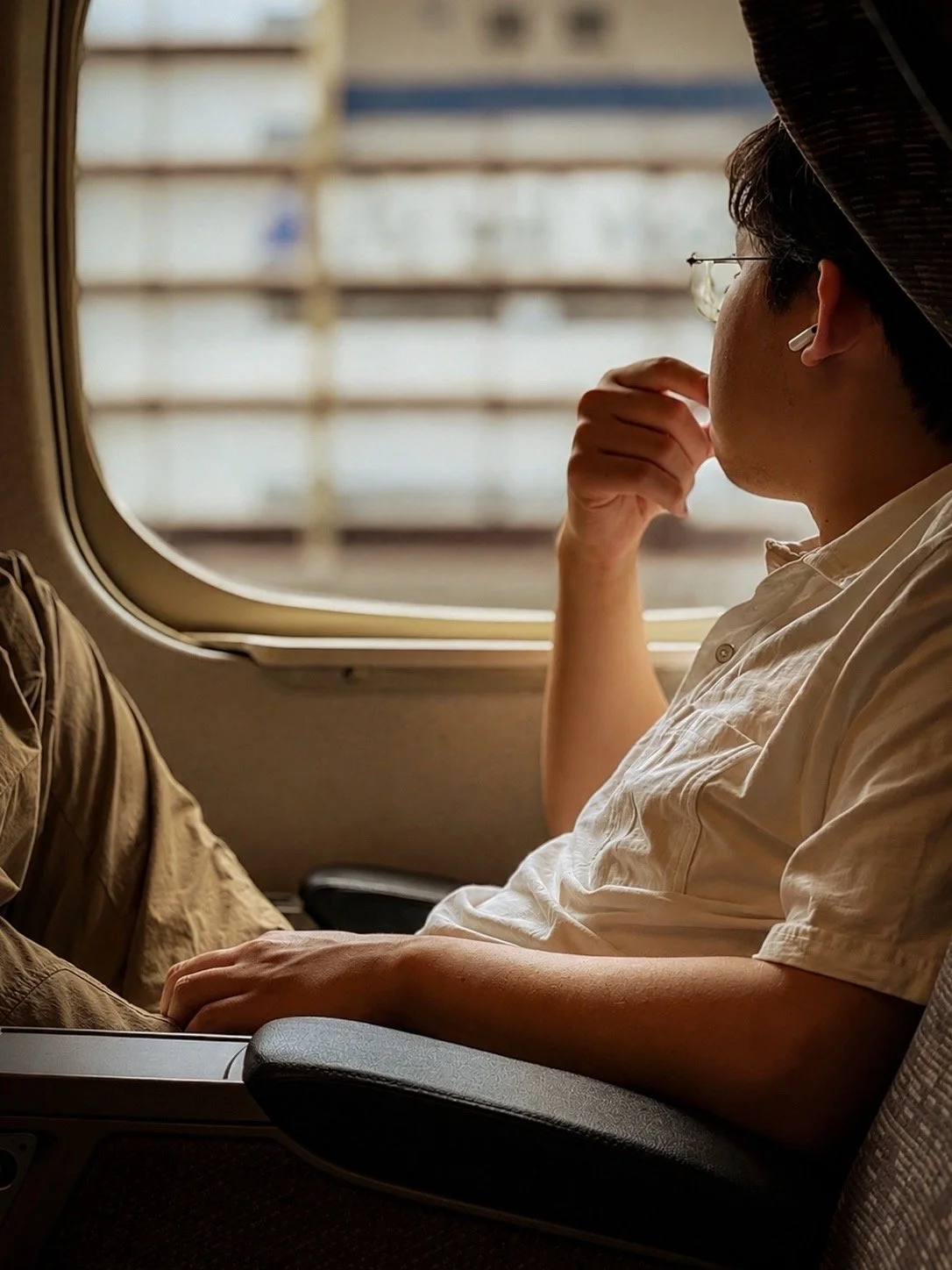
Every time we leave Japan, someone eventually asks the question: "Isn't it hard to leave?"
The answer is always a resounding yes...and no.
Both are true.
After a month in Tokyo, I was ready for my own bed, my own kitchen. Our house. I was ready to sip my overly-sweetened coffee in the corner of our sofa and watch the sunlight cast shadows through the trees in our yard first thing in the morning. I was even looking forward to using our over-sized (re. regular American sized) washer and dryer. If you’ve ever spent any amount of time living in Asia, you’ll understand this one. There is great comfort in returning to the familiar.
But comfort isn't the same thing as belonging.
People often assume what I miss most about Japan is the food, the events, the people, even the walkability. And I do miss those things. Deeply. But they're not what makes leaving so difficult.
Tokyo is where I find myself examining who I am. It’s where I feel like I have the time to ask questions or wade through thoughts I seem too busy—or perhaps too distracted—to ask anywhere else.
Who am I? What do I want? What am I creating? What kind of life am I trying to build? What comes next?
Until now, Life, Edited has largely been observational. I've written about my family, places, experiences, and ideas. Those stories were personal, but they were often told by looking outward.
In June, something shifted. Without quite realizing it, the focus started to change. I had started turning the lens around.
As a photographer, that feels strangely vulnerable—which is a place I've really been getting comfortable in these past few weeks. If you know me, you've heard me say it more than once: I don't like being in front of the camera. I'm much happier documenting someone else's story than standing in front the lens myself. That's my comfort zone and I'm pretty good there.
Yet June made me the subject of many Edits—unexpectedly...and somehow, not unhappily. Not because I suddenly have the answers, but because I finally felt ready to ask some questions I'd put aside, and recommitting to the person I’ve always been. Let me explain.
In Japan, I’ve been asked by friends if I know my ikigai—my reason why, my purpose. In some ways, I do. My family, the life we've built together, the choice to be present for it, vounteering—that's a purpose I understand completely, and it fulfills me. But there's another piece I'm still finding: who I am professionally, creatively, outside of the roles I've already claimed, and I have begun to recognize the thread that runs through almost everything I'm a part of.
Whether I'm photographing a quiet temple garden, wandering a neighborhood with no destination, collecting goshuin, sitting in a conversation and catching the detail someone else missed, or losing myself in a novel and noticing the hint dropped three chapters before it matters—I find myself doing the same thing over and over again.
I'm paying attention. I've always been paying attention.
And perhaps that has always been a part of my work—my purpose. Not documenting extraordinary moments, not chasing novelty, but simply noticing what’s already there.
Tokyo doesn't make me into a different person. It reminds me of the person I already am—the best and fully realized version.
This doesn’t mean I leave my identity behind every time I board a plane back to the U.S.. The curiosity is still mine, the creativity is still mine. The desire to wander, to notice, to participate, to take photographs, to write—all of that is still very much me.
What changes is the environment.
Tokyo seems to draw these parts of me to the surface almost effortlessly. The city invites me to walk instead of rush. To observe instead of consume. I get to participate in the day rather than simply move through it.
It doesn't take long for ordinary life to return once I'm home. The inbox fills (often while I’m on the plane). The calendar begins making its demands and responsibilities reclaim their place. None of those things are bad or wrong—they’re simply the rhythm of everyday life. The real question isn't whether those things will return. It's whether I can meet them without losing the version of myself that Japan so easily brings out.
Returning home isn’t difficult because I become someone else. It's difficult because the place that so naturally calls this version of me forward is suddenly thousands of miles away.
So perhaps that is the real work of this next chapter: carrying that part of who I am home and learning how to protect the conditions that allow the best of myself to emerge. Because if this month has taught me anything, it is this: Tokyo has always known how to bring this version of me out. This chapter is learning how to do it on my own.
