Edit 51: Being An Anthology
A Case Against the Niche
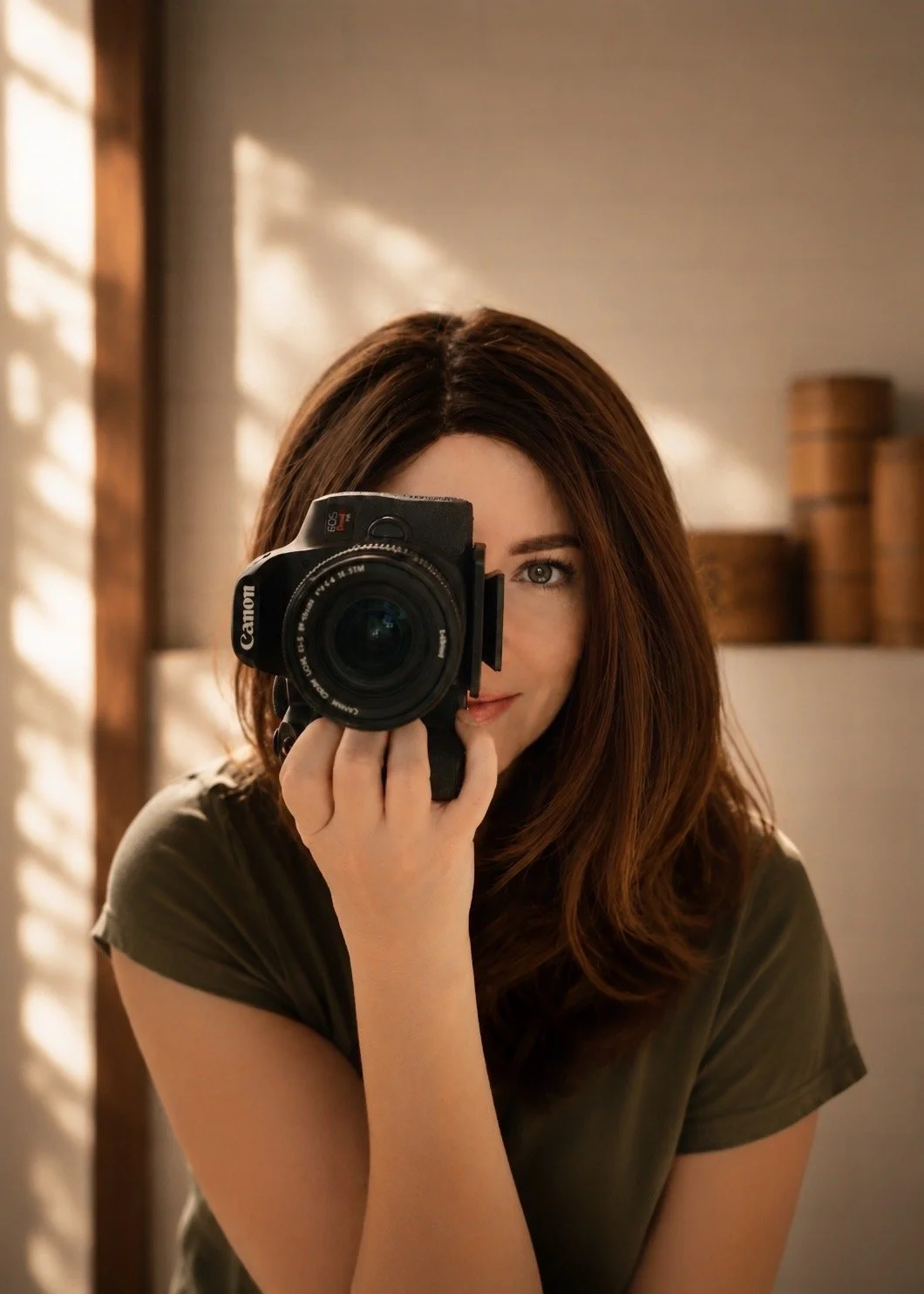
"What do you photograph?"
It should have been an easy question. Technically, it is. But on this night in February, I hesitated. Instead, I found myself standing in the Mint Museum staring back at the docent for a moment longer than was probably socially acceptable.
Because the answer was (and still is) everything.
Flowers. Architecture. Street scenes. People. Temples. Cars. Gardens. The way morning light falls across a cup of coffee. The way rain reflects neon onto a Tokyo street.
The problem wasn't that I didn't have an answer. The problem was that I didn't have only one.
The look she gave me suggested what many would probably think: that I needed a focus. A niche. A lane.
There was a time when I thought so, too.
Here is what I have come to understand instead: the thing that unites everything I photograph has never been the subject. It was never going to be flowers or cars or people. It was what I noticed.
I am not drawn to things. I am drawn to moments—the particular angle of light, the half-second before someone's expression settles, the way a place holds its own atmosphere if you are patient enough to wait for it. Flowers and gardens and Tokyo streets at night are not separate interests competing for my attention. They are simply wherever the noticing happens to land that day.
A niche asks: what is your subject? But I have never been answering that question. I have been answering something else entirely: what is worth paying attention to? And the answer to that question is, infuriatingly, almost everything, if you are willing to actually look.
But the truth is, no one is actually one thing. Pick any career that sounds singular from the outside—say, a doctor—and the inside of it is not singular at all. A doctor who specializes in one system of the body still has to understand the rest of the body well enough to know how that system fails it, or is failed by it. Specializing has never meant only knowing one thing. It has only ever meant choosing where to go deepest, while still needing to know enough about everything else to get there. Even the most singular-sounding answer is hiding a whole anthology underneath it. Some people just have a tidier word for the sum of theirs.
I understand why the question gets asked, though. Truly. We are told, all of us, in one way or another: pick one thing. Become known for it. Stay in your lane. Build your brand.
Niche, niche, niche.
It is not only photographers who hear this. I have heard it as a writer, told to find my genre. I have heard it as a performer, told to find my type. I have heard it, in quieter and more domestic registers, as a wife and a mother, told—by no one in particular and by everyone at once—to find my role and stay inside it.
For years, I tried. I have spent real time trying to become one thing, on the theory that one thing was easier to explain and understand.
But the older I get, the more suspicious I become of anything that asks me to make myself smaller so I'm easier to categorize.
It was at Nezu Museum gardens, months after that brief conversation at the Mint Museum, that I finally understood why it had stayed with me. I had slowed down enough to let the thought finish. And the thought was this: I have spent enough of my life trying to become one thing. Now I am far more interested in becoming fully myself.
And it turns out that person is curious about almost everything. She always has been. The niche was never missing. It was just never going to be a single subject—it was going to be a way of seeing, applied to whatever was in front of her.
There is a particular privilege in getting older that I did not expect: the privilege of growing into more of yourself instead of less. No one warns you that the opposite is just as available—that you could spend a whole life becoming more palatable instead, smoothing yourself into whatever shape makes other people comfortable, and call it growth because it felt like progress at the time. That danger is real. I do not think I was guaranteed to avoid it.
I just got lucky enough to slow down in the right garden, at the right time, long enough to realize the distinction.
I think often about what the docent told us, just before she asked me what I photographed. The artist whose work we were standing in front of had not stayed in one medium either. He photographed. He designed clothing. He wore what he made.
And not one person in that room called him unfocused. They called him visionary.
I think, too, about the docent herself, and the particular look she gave me—something close to disbelief, as if I had just confessed to a kind of professional failure. She was a volunteer that day, which means the museum was not even the one thing she did with her life. I have to imagine she has other rooms she belongs to outside of that one, and wondered if it ever occurred to her that she was not exactly one thing either.
Standing there, though, I did not say any of this. I only said everything, and let her give me the look.
I don't carry the feeling from that look anymore.
I have stopped trying to shrink the shape of what I notice down to something easier for someone else to hold. The world doesn't need me categorized. It needs me honest—and honesty, in my case, has never once come from a single subject
I don't know what the docent went home to that night. I only know it was more than one room. Mine is, too: flowers, cars, temples, morning light, a family, a stage I don't stand on anymore. They aren’t chapters competing for space, but the whole book, open all at once.
An anthology. Not a niche.
