Edit 47: Reflected
The Mirror Mueck Made
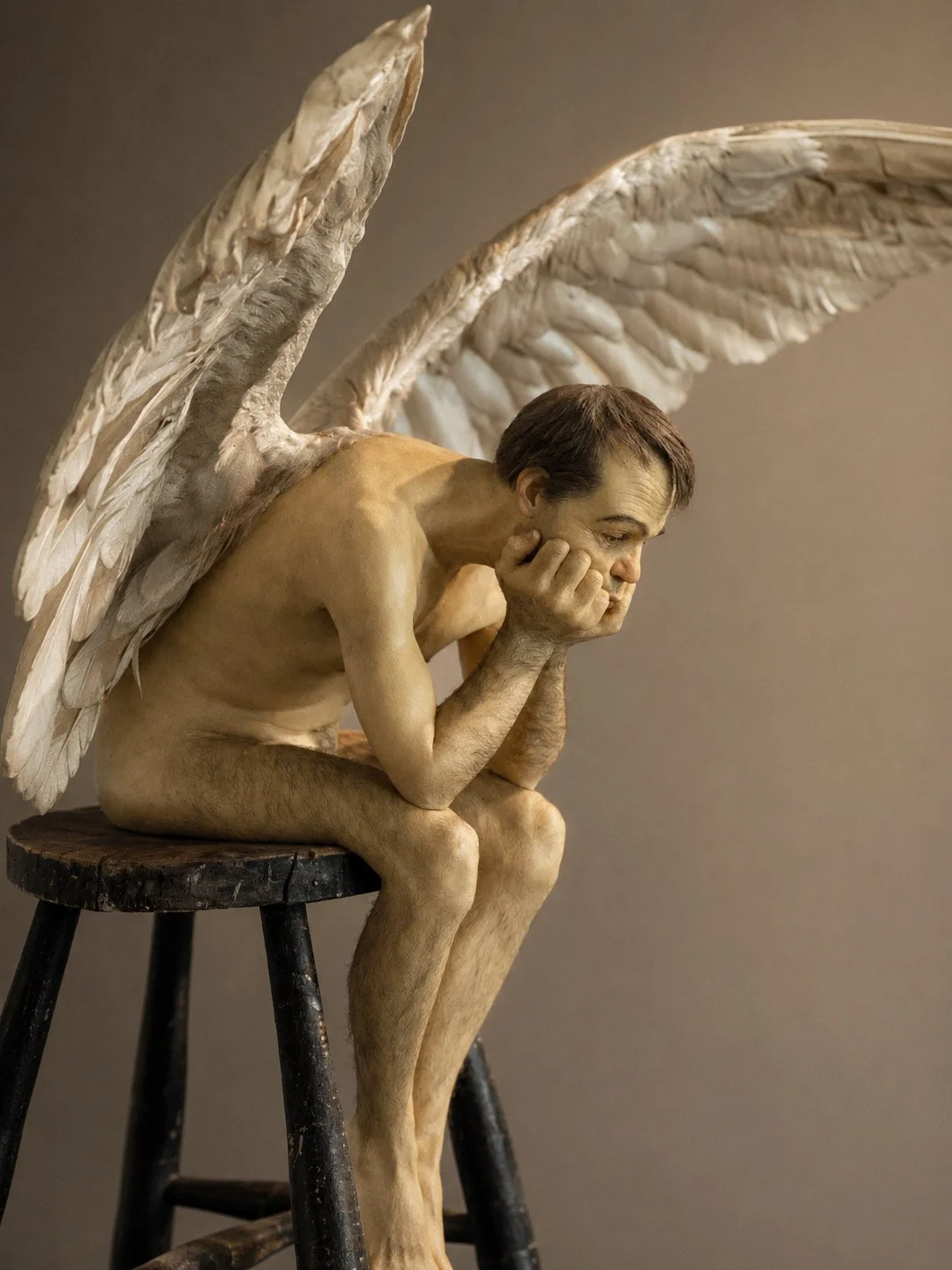
I have a habit when visiting exhibitions: I try not to read too much beforehand. I like walking into a gallery with no roadmap, letting the work find me—taking it in piece by piece, room by room. Then, if I'm with someone, there might be some discussion. But if it's a solo outing (as yesterday's was), that's when I begin to mull over the artist and their work.
Yesterday, at Ron Mueck's exhibition at the Mori Art Museum, I turned corner after corner and felt something I wasn't prepared for: recognition. Not of the artist or the work, but of myself. I love being introduced to new artists, new concepts, new ways of seeing. But it is rare—genuinely rare—that I leave an exhibition still carrying it hours later, turning it over and over until the only way through is to write.
People often talk about Mueck's extraordinary realism. The skin. The hair. The astonishing attention to physical detail. But standing in those rooms, I realized the realism isn't only physical.
It's also emotional. Viscerally.
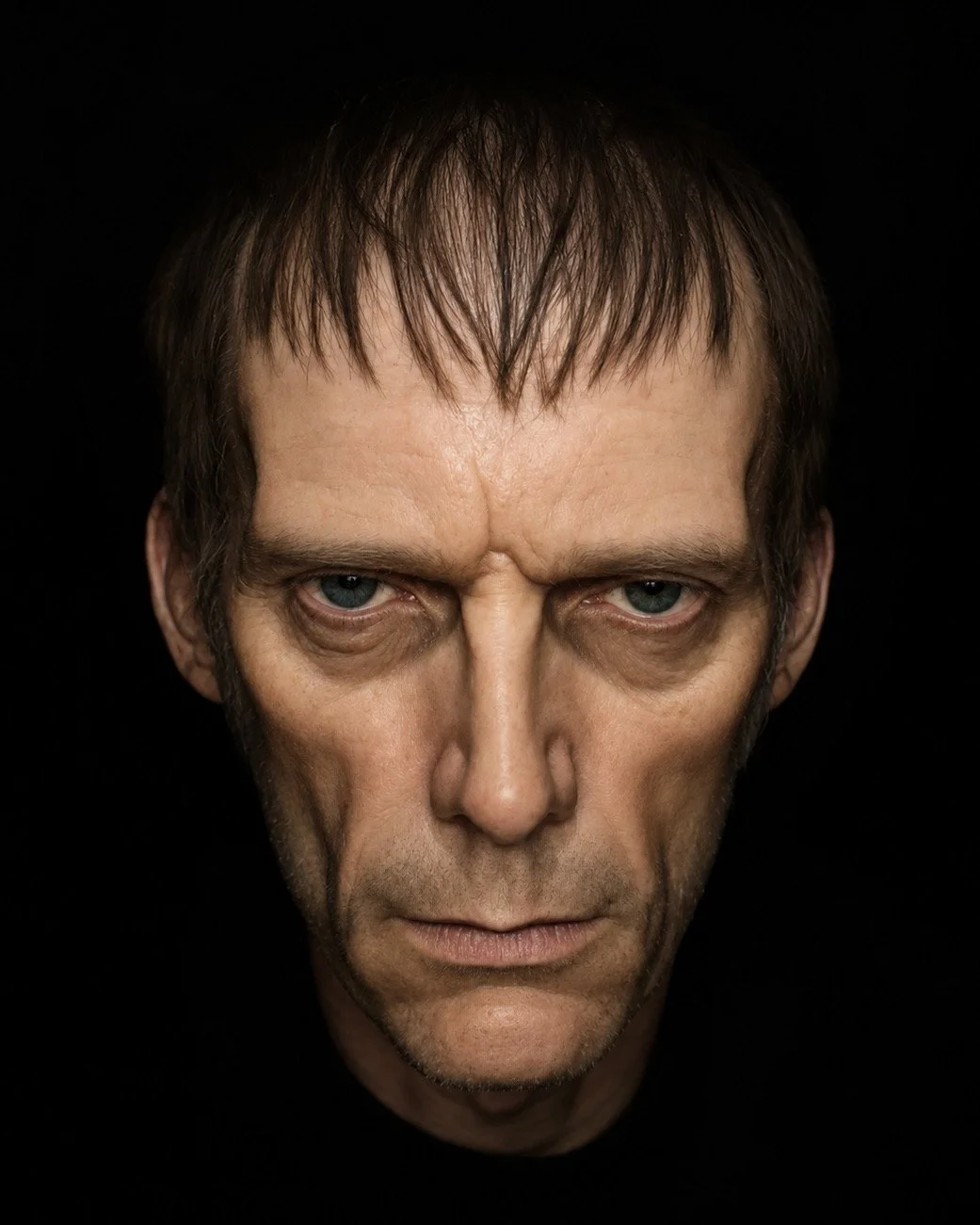
A man's face emerging from darkness—enormous, troubled, sealed inside itself—stopped me cold.
I know that face. Not because I've seen it on someone else, but because I've felt it from the inside. That particular type of anxiety that doesn’t identify itself as turmoil, but takes up residence in the chest and watches. It waits. I live with a version of that, and recognized it immediately.
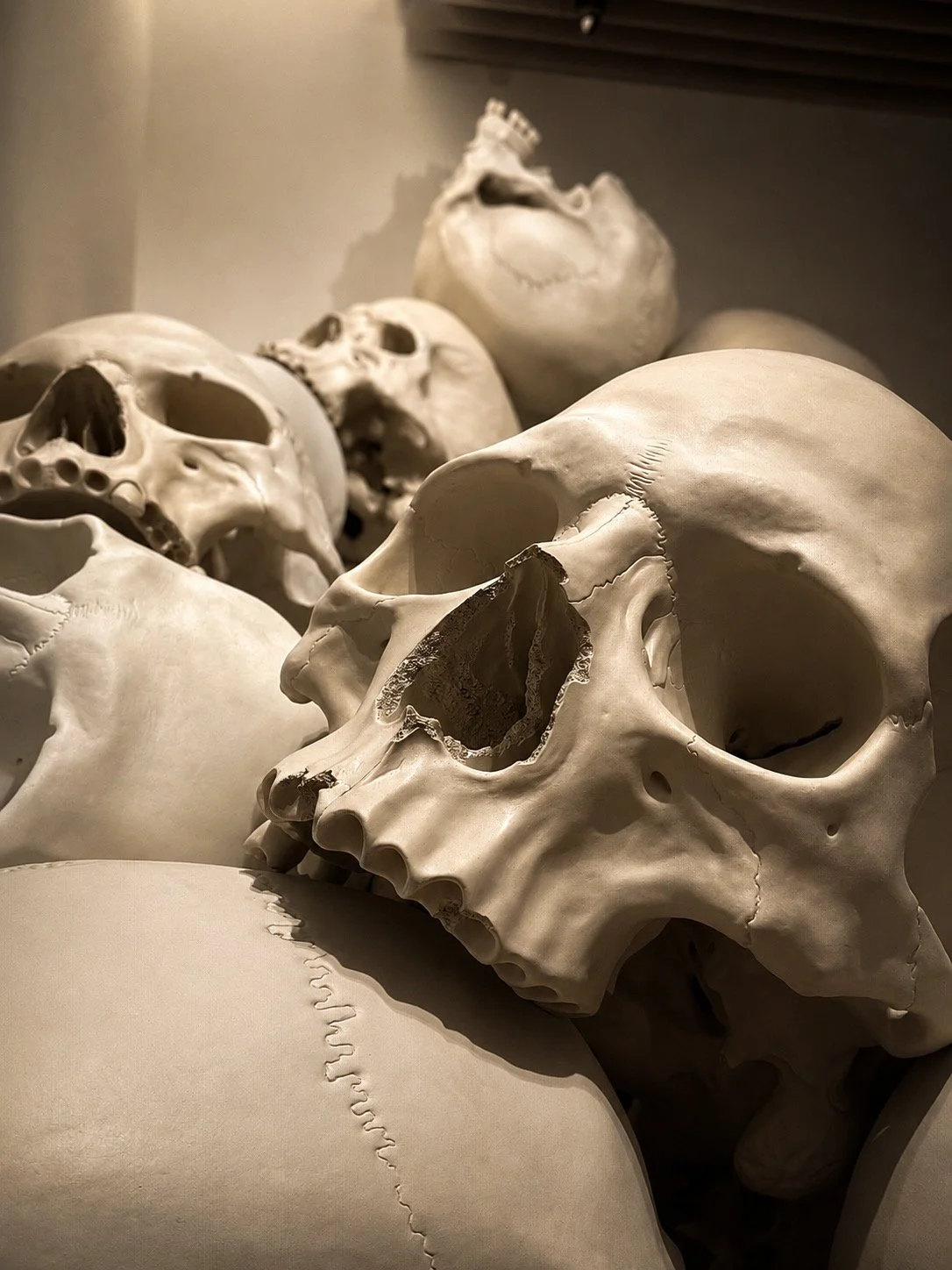
And then there were the skulls.
One hundred of them, oversized, stacked—and what struck me wasn't death exactly, but weight. The sheer accumulated weight of being human. Of carrying everything you carry, year after year, and knowing one day you won't.
Mueck makes his largest pieces about the feelings we carry most heavily. I don't think that's accidental.
The piece that undid me most was the woman in bed. She was intentionally monumental in scale, curled beneath the sheets, knees drawn up, fingers resting at her lips. The worry line between her brows was carved deep. Her expression was utterly, privately pensive. She was fretting. Working something over in the dark.
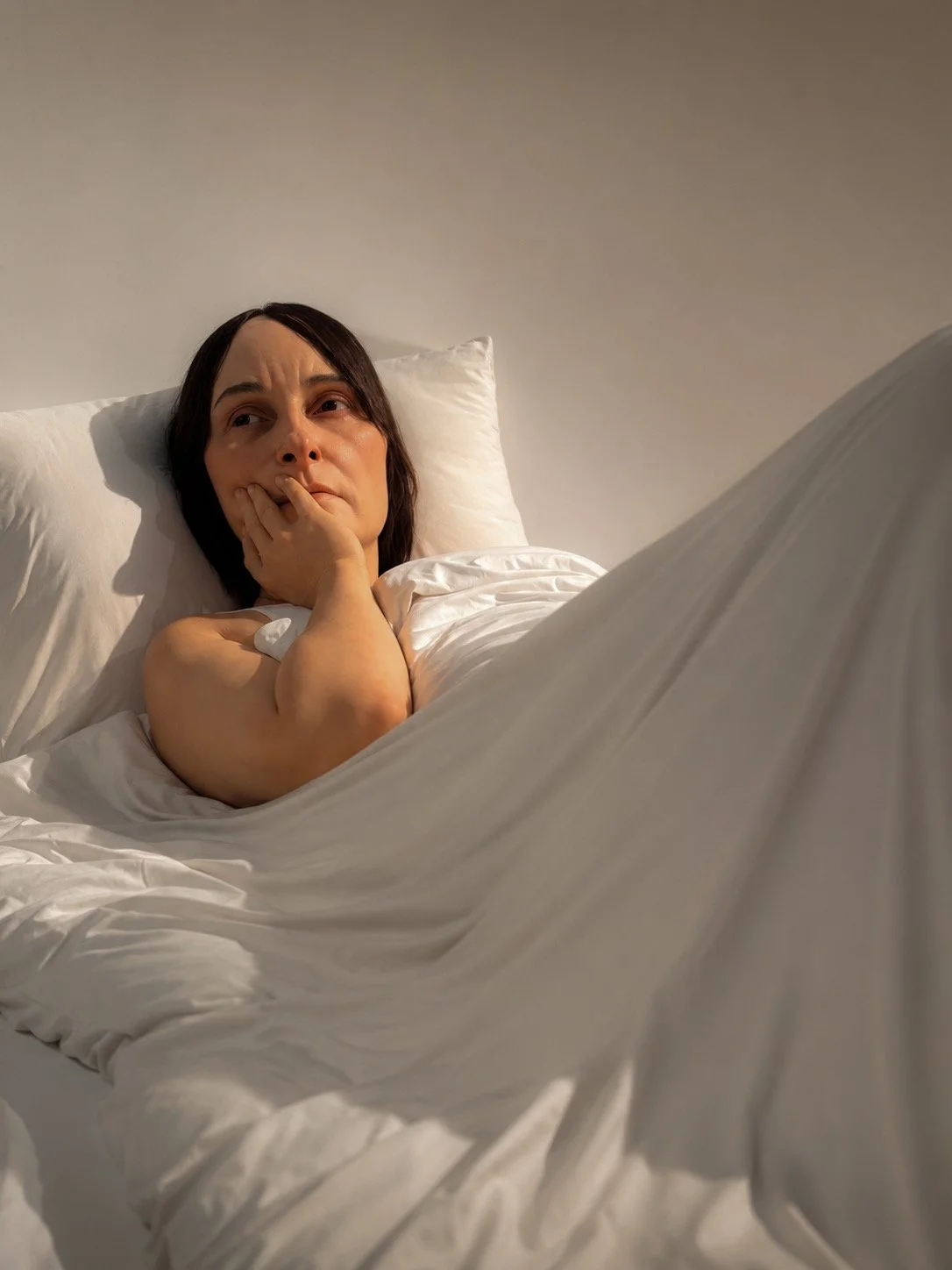
As a woman, a mother, as someone who knows the particular cruelty of anxiety at 3am—when the house is still and the mind is not—I felt that piece in my core. There is something powerful about seeing your interior life rendered at that scale. It doesn’t feel like an exaggeration, but a wholly accurate depiction. And it is staggering to have something so privately felt, so rarely spoken aloud, rendered this clearly. We speak about children having big feelings, as though adulthood comes with a volume knob we learn to turn down. But the feelings don't shrink. We just become more practiced at containing them. Mueck doesn't let them be contained. He builds them as large as they actually are, and suddenly you are standing in a room with your own inner life, and it has walls.
It should come as no surprise that my own walls came down that evening—in the shower, in a rush of tears I didn't try to stop. Some releases are their own kind of catharsis.
That is what I didn't expect to find on the 53rd floor of a building in Roppongi—not beauty, not spectacle, but the particular relief in being seen. I have been to many exhibitions at the Mori Art Museum and have enjoyed all of them. But this one will stay with me for quite some time.
Mueck doesn't invent feelings. What he creates are mirrors. He finds the ones we are already carrying—the ones we have been carrying—and he builds them large enough that they’re unavoidable. But standing in those rooms, I didn't feel exposed. I felt recognized. And there is something incredibly affirming in that: in knowing that when you feel things that strongly, that big, that heavy, you are not alone. That someone else has seen it too, has understood it, has taken the time to render it in painstaking detail so that you might one day turn a corner and find the relief in being reflected.
