Edit 16: On Adult Friendships
Before anything else, I want to begin with gratitude.
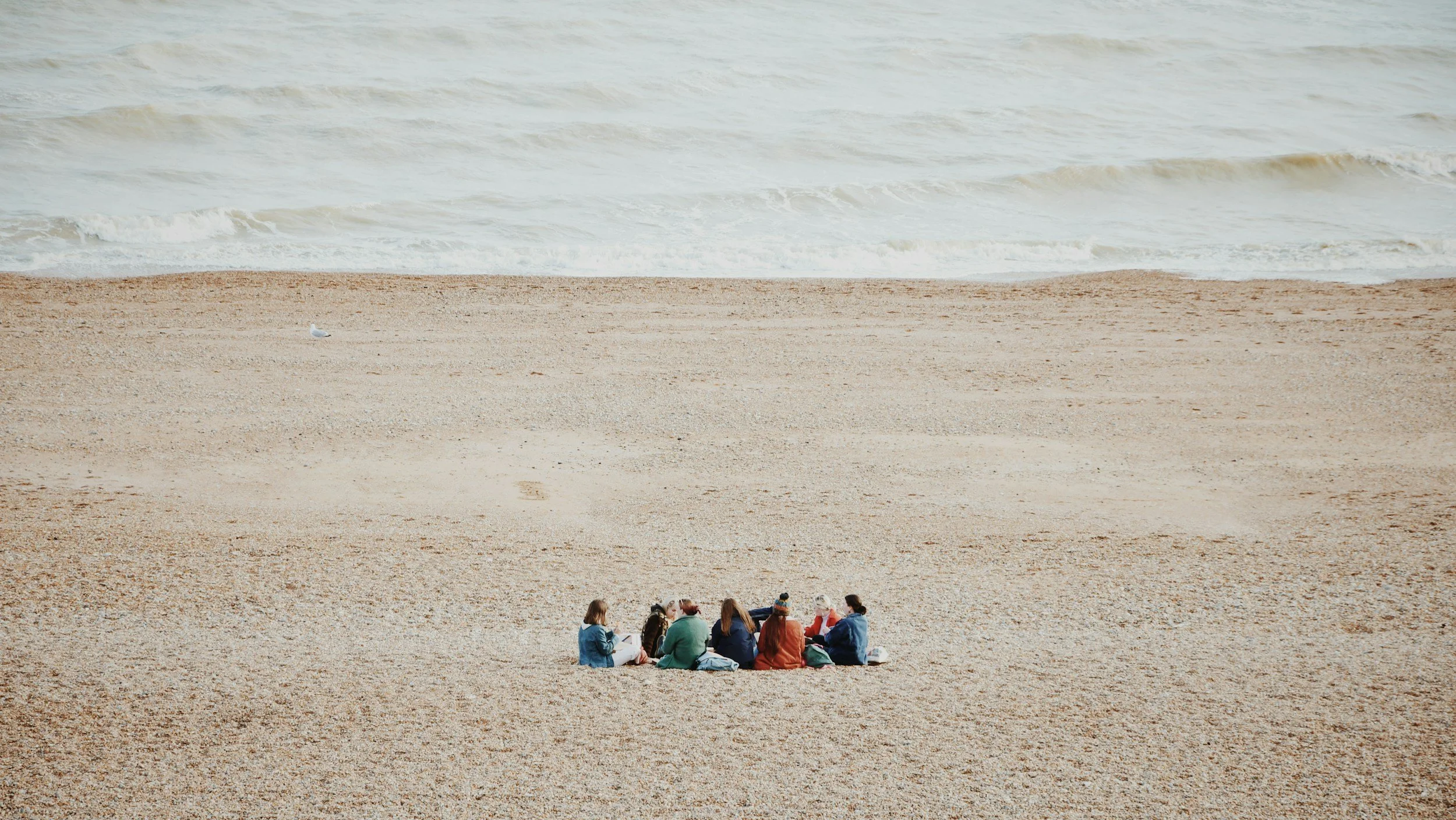
With all the moving our family has done, I’ve been blessed with a multitude of friendships. Charlotte has been no exception. Being back here has introduced new relationships that feel both easy and genuine.
Through the high school years, the mahjong fun, fundraisers, and without question, my time with the JLC, I’ve been met by women who show up with open hearts and sincerity. These are friendships that feel mutual, uncomplicated, and at my age? That’s a necessity.
Adult friendships aren’t something we ever fully master. They ask us to keep paying attention to ourselves, to one another, and the ways we change over time. Sometimes that learning comes from noticing when something doesn’t feel as solid as it once did.
Yesterday I began journaling through a few prompts: What personal growth do I want this season? and Do I feel uplifted by the people around me?
Simple enough, but questions like this have a way of asking more than you expect-especially once you start reflecting. As I sat with them, my thoughts took me back to a lesson I learned a while back, one that continues to inform how I navigate adult friendships with more honesty and care.
Several years ago, I was walking through a store with a friend, trying to explain a hurt I couldn’t ignore.
I shared how confused I felt by another friendship-how I couldn’t reconcile the way I was being treated with the closeness I thought we shared. I didn’t name her because it didn’t matter. What mattered was understanding why something that once felt close suddenly didn’t. I wasn’t looking to dissect a person or a relationship-I was trying to sort through my own feelings, out loud, with someone who would simply listen.
And blessedly, my friend did.
She listened, patient as a saint, while I told her how I was feeling, and then she offered a perspective that changed the way I understand friendships to this day. It took emotion out of the equation and as someone who can often be led by it, this helped tremendously.
My friend spoke about tiers-not as a way of ranking people, but of naming priority and intention. A-tier friends. B-tier friends. Not better or worse, just different levels of closeness and care.
Something about that framing really landed, because once I heard it, I could see what had been happening in the friendship that was hurting me.
I had been downgraded.
I was still being reached for when it was convenient, still useful when access to people and places, or support, was needed. But when I needed something, the energy shifted. I can’t say there weren’t telling moments-because there were-but since they happened over several months I hadn’t been able to see things for what they were.
Not until that afternoon, standing in a checkout line, when it all came together with picture perfect clarity…
An antique trip we were meant to take that never materialized, explained away at the time as a scheduling conflict (until I later learned otherwise from someone else).
An offer to bring something back from a specialty food shop as a thank you for letting her join me somewhere, followed by weeks of silence and no follow-through.
And then, unexpectedly, after those weeks of silence, a text message when she learned that I was hosting an event. Her questions were framed as friendly curiosity, but carried an unmistakable hint of wanting an invitation.
With my friend’s words still fresh, that was the moment things clicked. What had been hurting me wasn’t a single incident-it was a multitude of moments, both big and small-and after almost 3 months of wondering, now I understood.
I could name what had been bothering me.
I was no longer an A-tier friend to this person. I now lived somewhere in the B tier, maybe even lower, but there was a silver lining: I now knew how I could take my control back and end the pattern.
I had been extending A-tier energy-initiating, checking in, accommodating-while receiving something far more conditional in return, and that imbalance was costing me. So I adjusted. I stopped being the first to reach out, stopped filling in gaps that weren’t mine to close. I stopped explaining away behavior that didn’t match up with words.
What followed told me everything I needed to know: the distance didn’t appear because I stepped back-it had already been there. But it no longer hurt. I found peace with the reality of the friendship.
What began as insight offered during a moment of sadness became a lesson I’ve carried with me for years.
It taught me that clarity is kinder than obligation, that consistency matters, and that caring for people sometimes means doing so from a distance.
These are tiers that aren’t about judgement-they’re about being honest.
They help me meet friendships where they actually are instead of where I wish they’d be. They help me to be smarter with my energy and time, and they help me to remember that not every relationship has to be deep to matter.
Some friendships are inner-circle and enduring, some are warm but more casual, and some are gradually let go-not because they failed, but because they changed. And that’s okay.
Lately, I’ve been more aware of where my energy goes and how finite it really is. Time, attention, emotional bandwidth…these aren’t limitless resources. In this season of edits, I’m moving with greater intention, paying closer attention to what feels steady and letting go of what doesn’t. Writing this now feels less like revisiting an old lesson and more like recognizing how it continues to guide the way I care for my relationships.
Years later, I can see how much this understanding has shaped the way I navigate friendships: with more grace, less confusion, and far fewer unspoken expectations.
I have so much gratitude for the friend who listened first, and then offered clarity when I needed it most.
Not all growth requires a conversation. Sometimes it looks like noticing what truly uplifts you, being honest about what doesn’t, and choosing differently for yourself from there.
