Edit 27: Weathering Heights
I am a podcasts-or-music person when piddling around the house.
Washing and putting away laundry. Cleaning out a junk drawer, clearing off tabletops, cooking or baking…I like a voice in the background while I move through routines.
I listen when I walk, when I wander.
I listen in the car, too—especially on day trips. There’s something about highway miles and a long stretch of road that makes a story settle differently. The world outside the windshield disappears for a bit, and whatever I’m listening to feels closer somehow—less like noise, more like company.
Recently, that company has been ‘The Red Weather’.
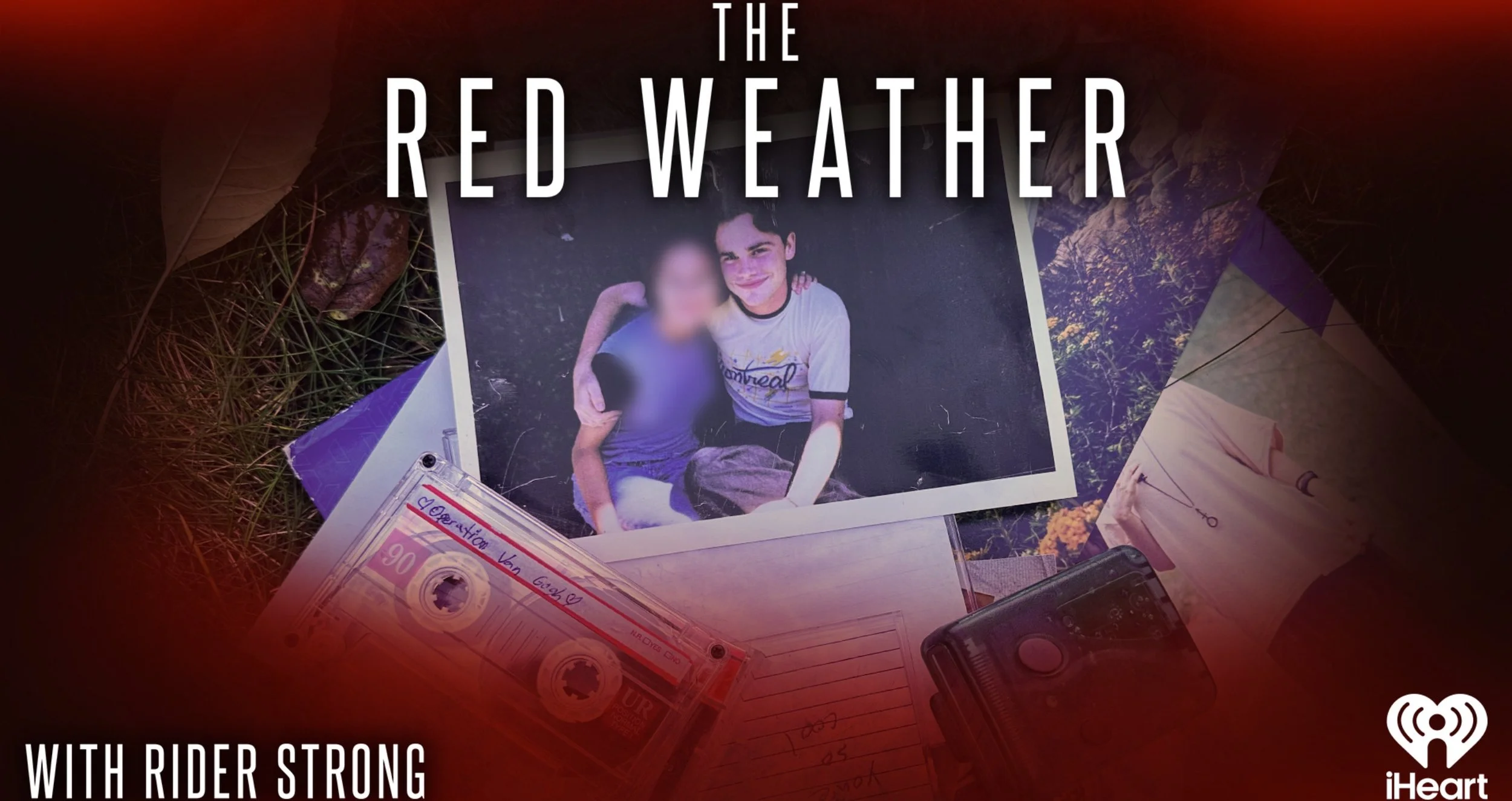
And the voice telling it belongs to Rider Strong.
Yes, THAT Rider Strong.
If you’re Gen X, you knew him first from ‘Boy Meets World’—the crush-worthy, thoughtful, slightly brooding best friend who shaped more than a few adolescent ideas about loyalty and conscience. If you’re a following generation, you likely met him through streaming or cultural osmosis. Either way, his voice is a familiar one.
One that makes you feel pleasantly nostalgic.
But there’s a particular pang in hearing someone who once narrated your teenage years now narrate something darker. A mystery set in 1995. A girl who disappeared. A hometown that never quite let the story go. The series weaves fiction and reality so seamlessly that you feel suspended between them—aware you’re listening to a constructed story, and yet emotionally invested as if it really happened.
I started listening because I love a mystery. I continued listening not only because it was well done, but because it got me thinking about a background aspect that was integral to the plot.
Somewhere between folding towels and merging onto a two-lane highway, I found myself thinking about more than just the missing girl. I found myself thinking about how stories take root. How repetition builds belief. How belonging—especially in adolescence—can feel like oxygen.
And how the past, when revisited, doesn’t just explain what happened.
It reveals what we were willing to believe.
As the episodes unfold, the mystery remains central: what happened, who knew what, what memory has softened or distorted over time. But beneath the plot, to me, there was another current running just as strong: belonging.
The series circles a commune, a charismatic leader, a group of people certain they had found something truer than the outside world. And it isn’t imagined in a vacuum. The project grew out of Rider Strong’s earlier documentary work exploring the history of communes in and around his hometown of Sebastopol, California—real communities, real seekers, real attempts at building alternative ways of living.
It would be easy to listen and wonder: How could anyone get pulled into that? But the more I listened, the more curious I became about the ordinary beginnings.
No one wakes up with the goal of surrendering their autonomy. At least, I hope not. What I do believe is that we all desire connection. Common ground. We want meaning and certainty—a place where questions quiet down.
And that’s the part that followed me from room to room, from car to destination.
The human appetite for coherence is powerful. We like our stories to resolve. We like our communities to affirm us. We like the comfort of a shared language — especially when the world feels loud or fractured. Repetition settles in. Narratives reinforce themselves. Belief, when echoed often enough, begins to feel like fact. That's not a comfortable thought to sit with, but I think it's an honest one.
The podcast isn’t about our current politics. It isn’t about modern movements at all. These are my musings as the story evolved and new episodes dropped, and what stood out to me as I finished Episode 8 was something pretty relevant. ‘The Red Weather’ explores how easily any of us can be shaped by the stories we stand inside.
There’s a difference between choosing your focus and having it chosen for you.
That distinction feels small, but it isn’t.
After concluding the podcast—after sorting through my thoughts and beginning to put them pen to proverbial paper—I started to think about what I allow to play in the background of my own life. What voices I give my attention to while I fold laundry, while I drive, while I scroll. Not in a fearful or defensive one. Just in a thoughtful way.
Weather passes through. It always does. The question is whether we notice when we’re standing in it—and whether we are choosing where to plant our feet.
